Why providing mental health training during your induction and onboarding process is so important
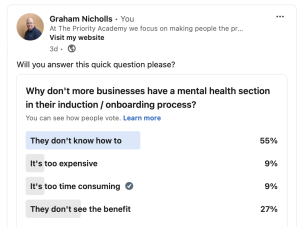
Top Five Benefits of Including a Mental Health Section in Induction and Onboarding
When new employees join a company, the induction and onboarding process is their first taste of the you culture and values. Including a mental health section in this process brings substantial benefits to both the employees AND your business. Here are the top five benefits of integrating mental health training into the induction and onboarding process:
1. Promoting a Culture of Openness and Awareness
Including mental health training into the onboarding process immediately says to new employees that they are starting with a business that cares about them. This openness encourages employees to speak freely about their mental health concerns. Thus, reducing stigma and promoting awareness from the outset of their employment with you. When employees feel comfortable discussing such topics, it leads to a healthier workplace where problems can be addressed proactively rather than being ignored. Of course, when issues around mental health can be discussed openly then so can all business operations.
2. Increasing Employee Engagement and Productivity
Employees who feel supported in all aspects, including their mental health, are more engaged and productive. You will have seen the statistics before around mental health reducing productivity, efficiency and profit, right? By providing tools and resources during onboarding, businesses help their employees to handle stress effectively and maintain mental wellness. This proactive approach can lead to reduced absenteeism, increased job satisfaction, and improved morale. When employees are better prepared to manage both their professional and personal challenges effectively, their performance improves.
3. Reducing Turnover and Associated Costs
The cost of employee turnover can be significant and is on the increase. Involving not just the direct costs of hiring and training, but also the indirect costs of lost productivity and morale. A focus on mental health can make employees feel valued and cared for, significantly boosting staff retention across the business. New employees are more likely to stay with a company that invests in their well-being from day one, ensuring they feel supported and a part of the team.
4. Building Resilience in Teams
Including mental health training in the induction process helps build resilience across the business. Improved resilience is a key part of building emotional intelligence. Employees learn, early on, some core coping mechanisms and strategies for managing stress and adversity in the workplace. This training ensures that when challenges come up (and we know they will), your team are more capable of handling stress and bouncing back quicker. This helps in maintaining a stable workforce and continuing to perform effectively under pressure.
5. Attracting and Keeping Top Talent
A study in 2023 showed that 61% of leaders and managers had considered changing jobs to a business who had better mental health support. Today’s leaders are not just interested in salary and traditional benefits; they are also looking for employers who support their well-being, including mental health. By providing a commitment to mental health from day one of their employment, your business can attract top talent who value these qualities in their employer. This makes the company more competitive in the job market and helps to build a workforce that is diverse, skilled, and motivated.
Incorporating mental health into your induction program
Incorporating mental health education into the induction and onboarding process is a strategy that benefits both the person and your business. It helps to build a supportive workplace culture, improves productivity, reduces turnover, builds team resilience, and enhances the company’s appeal. Ultimately, this integration demonstrates the commitment of your business to you most valuable asset: your workforce people. As your business continues to recognise the importance of mental health, the results will begin to show across the board.
We can help!
The Priority Academy helps businesses to support the mental and emotional health of their staff. We offer various options including a workforce mental health assessment and training to support your people. Find out more below.
Click the links below to learn more:
The Workplace Mental Health Induction Workshop